
Reading Level master .doc download
http://www.mrsmumpower.com/.../Reading Level master.doc
level one reading exam uk [New Version]
level one reading exam uk [FullVersion]
[HIGHSPEED] level one reading exam uk
[TRUSTED DOWNLOAD] level one reading exam uk
http://pdfdatabase.com/index.php?q=level+one+reading+exam+uk
Tuesday, 22 December 2009

Listening , Reading , Reading , Vocabulary
Listening is a communication skill that needs a lot of practice. There are many different English accents in the world, and a good listener can understand them all.
ability to read for purpose.
grammar is the skeleton of the English language. It holds up everything else.
Remember… if you self- correct a grammar mistake 3 times, you generally will not make it again!
Like grammar, vocabulary builds the English language. The Oxford English dictionary has approximately 600,000 definitions! We will never say that English is easy.
:skils:
Speaking
Pronunciation
Listening
Reading
Grammar
Vocabulary
ability to read for purpose.
grammar is the skeleton of the English language. It holds up everything else.
Remember… if you self- correct a grammar mistake 3 times, you generally will not make it again!
Like grammar, vocabulary builds the English language. The Oxford English dictionary has approximately 600,000 definitions! We will never say that English is easy.
:skils:
Speaking
Pronunciation
Listening
Reading
Grammar
Vocabulary
Does Brain Age actually make you smarter? We have no idea, but it's still an interesting puzzle game available at a budget price.
Does Brain Age actually make you smarter? We have no idea, but it's still an interesting puzzle game available at a budget price.
* Great sudoku
* Interesting use of the DS dual screens.
===
Since the heady days of arcade favorites such as Asteroids, Pac-Man, and Missile Command, people have claimed that video games can help sharpen your reflexes and keep you thinking fast. But there never seemed to be any hard science to back it up. Over 20 years later, Nintendo's releasing a product for the Nintendo DS that is squarely aimed at that hard science, making the claim that playing Brain Age: Train Your Brain in Minutes a Day can "make your brain feel fresh and sharp." Well, we're not scientists, so we can't necessarily prove or disprove that claim, but as a budget-priced game, Brain Age is strangely compelling, even though its very nature is brutally repetitive.
Brain Age is mostly about flexing your math skills.
The focus of the game's educational aspect is that the activities on display are designed to activate your prefrontal cortex, the part of the brain that controls how you apply what you know. The theory is that by flexing this part of your dome with basic math problems and memorization, you can sharpen your intelligence. The game presents you with a series of different simple tasks that you are to perform daily. Your performance is stored in a profile and displayed via a series of graphs that quickly tell you how well you've been doing. Additionally, there's an overall test that determines your "brain age" based on a sampling of the brains of various people of various ages. The best score you can get is 20, signifying that your brain is as nimble as a 20-year-old. Well, a smart 20-year-old, anyway.
You play the game solely with the touch screen, and on top of that, you hold the DS sideways. Info appears on the main screen, and you answer questions with the touch screen. The tasks you're given are basic math and reading comprehension, with some memorization thrown in. You start out with calculations x20, which gives you 20 simple math problems to complete. From there, you get the harder version, which gives you 100 problems. You eventually get one that measures how quickly you can read, one that asks you to memorize the placement of numbers on a grid, one that asks you to quickly count how many syllables are in a phrase, and so on. There aren't a ton of different tests, but the game unlocks them over time, so you aren't given the opportunity to burn out on all of them right away. For the most part, they're interesting, and if you get into attempting to beat your own score (or the scores of another player that's using the same copy of the game), they can get sort of addictive.
Aside from the brain-training aspect of Brain Age, there's also a multiplayer mode that lets you get into a calculation battle against up to 15 other players using a single copy of the game. But the other additional draw is a lot more compelling than that. Brain Age comes with a substantial amount of sudoku puzzles. The addictive numbers-and-logic game is done very well here, putting the touch screen to use in an effective manner.
Brain Age has a good amount of well-implemented sudoku puzzles.
The touch screen and DS microphone make the whole game possible. It's a really slick way to play the game, but it's also reliant on your handwriting and ability to speak clearly. When you're rushing through math problems, it's easy to squiggle down something that the game will misinterpret. This is extremely frustrating, as you're penalized for mistakes. The voice recognition doesn't come into play very often, and you can bypass it entirely if you like, but we had trouble getting it to recognize certain words. Over time, you figure out exactly how the game wants you to write and speak and then adapt to it. For the most part, though, the recognition is pretty impressive, especially considering there's no calibration process involved.
All in all, Brain Age is a quirky and unique product that's worth taking a look at, largely thanks to its budget price. Whether or not it's improving your mind or just improving your ability to perform its specific tasks is ultimately unclear, but there's currently nothing else quite like it on the market, and fans of logic puzzles and other basic puzzle games should enjoy it quite a bit.
source
By Jeff Gerstmann, GameSpotPosted Apr 15, 2006 1:50 am GMT
* Great sudoku
* Interesting use of the DS dual screens.
===
Since the heady days of arcade favorites such as Asteroids, Pac-Man, and Missile Command, people have claimed that video games can help sharpen your reflexes and keep you thinking fast. But there never seemed to be any hard science to back it up. Over 20 years later, Nintendo's releasing a product for the Nintendo DS that is squarely aimed at that hard science, making the claim that playing Brain Age: Train Your Brain in Minutes a Day can "make your brain feel fresh and sharp." Well, we're not scientists, so we can't necessarily prove or disprove that claim, but as a budget-priced game, Brain Age is strangely compelling, even though its very nature is brutally repetitive.
Brain Age is mostly about flexing your math skills.
The focus of the game's educational aspect is that the activities on display are designed to activate your prefrontal cortex, the part of the brain that controls how you apply what you know. The theory is that by flexing this part of your dome with basic math problems and memorization, you can sharpen your intelligence. The game presents you with a series of different simple tasks that you are to perform daily. Your performance is stored in a profile and displayed via a series of graphs that quickly tell you how well you've been doing. Additionally, there's an overall test that determines your "brain age" based on a sampling of the brains of various people of various ages. The best score you can get is 20, signifying that your brain is as nimble as a 20-year-old. Well, a smart 20-year-old, anyway.
You play the game solely with the touch screen, and on top of that, you hold the DS sideways. Info appears on the main screen, and you answer questions with the touch screen. The tasks you're given are basic math and reading comprehension, with some memorization thrown in. You start out with calculations x20, which gives you 20 simple math problems to complete. From there, you get the harder version, which gives you 100 problems. You eventually get one that measures how quickly you can read, one that asks you to memorize the placement of numbers on a grid, one that asks you to quickly count how many syllables are in a phrase, and so on. There aren't a ton of different tests, but the game unlocks them over time, so you aren't given the opportunity to burn out on all of them right away. For the most part, they're interesting, and if you get into attempting to beat your own score (or the scores of another player that's using the same copy of the game), they can get sort of addictive.
Aside from the brain-training aspect of Brain Age, there's also a multiplayer mode that lets you get into a calculation battle against up to 15 other players using a single copy of the game. But the other additional draw is a lot more compelling than that. Brain Age comes with a substantial amount of sudoku puzzles. The addictive numbers-and-logic game is done very well here, putting the touch screen to use in an effective manner.
Brain Age has a good amount of well-implemented sudoku puzzles.
The touch screen and DS microphone make the whole game possible. It's a really slick way to play the game, but it's also reliant on your handwriting and ability to speak clearly. When you're rushing through math problems, it's easy to squiggle down something that the game will misinterpret. This is extremely frustrating, as you're penalized for mistakes. The voice recognition doesn't come into play very often, and you can bypass it entirely if you like, but we had trouble getting it to recognize certain words. Over time, you figure out exactly how the game wants you to write and speak and then adapt to it. For the most part, though, the recognition is pretty impressive, especially considering there's no calibration process involved.
All in all, Brain Age is a quirky and unique product that's worth taking a look at, largely thanks to its budget price. Whether or not it's improving your mind or just improving your ability to perform its specific tasks is ultimately unclear, but there's currently nothing else quite like it on the market, and fans of logic puzzles and other basic puzzle games should enjoy it quite a bit.
source
By Jeff Gerstmann, GameSpotPosted Apr 15, 2006 1:50 am GMT
How to Build a Snowman

How to Build a Snowman
source
Building a snowman provides an entertaining, creative way to get some fresh air on a lazy winter day. You'll need a few inches of snow on the ground; wear gloves or mittens.
1.
Step 1
Test to see if you have 'packing snow,' which clumps together easily and isn't too wet. The snow must pack to make a snowman.
2.
Step 2
Shape a handful of snow into a ball. Continue adding more snow and packing the ball until it's too large to hold.
3.
Step 3
Place the ball on the snow in front of you and slowly roll it away from you. As more snow accumulates on the outside of your ball, pack the snow by pressing on it with your gloved hands.
4.
Step 4
Roll and pack the ball over and over until it is the size you want for the bottom of the snowman's body.
5.
Step 5
Repeat for the midsection and head. The bottom should be the biggest ball, and the top should be the smallest.
6.
Step 6
Pack some extra snow between the layers to make them stick together. Place sticks down the center where the sections meet if your snowman is having trouble standing erect.
7.
Step 7
Give the snowman a face. Use coal, rocks, buttons or anything dark and round for the eyes. A horizontal stick or twig will make a good mouth, and a carrot is fine for the pointy nose. If you don't have a carrot, a banana or a candy cane will do the job.
8.
Step 8
Cover the top of his head with an old plant for hair, or give him a knit hat to wear. Top hats will blow away unless secured.
9.
Step 9
Add arms, legs and other accessories. Push sticks into the sides of the middle section and hang old mittens on the ends, then place boots at the bottom for legs. Also consider adding items such as a shirt, a scarf or sunglasses.
How to Play Chess
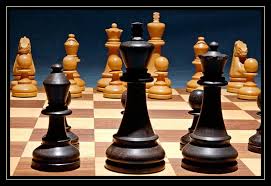
How to Play Chess
go to this site
For Beginners and Parents
==
Chess is fun and learning how to play chess is very easy. Read the Rules of Chess and then watch the Flash movies on chess basics, or jump around and learn about one chess piece or the other.
...
http://www.chessdryad.com/education/magictheater/
The Rules of Chess
(Print and Images)
The Chess Board
The Pawn
The Knight
The Bishop
The Rook
The King
The Queen
How to Castle
En Passant
Check!
Checkmate!
Stalemate?!
Subscribe to:
Posts (Atom)

